

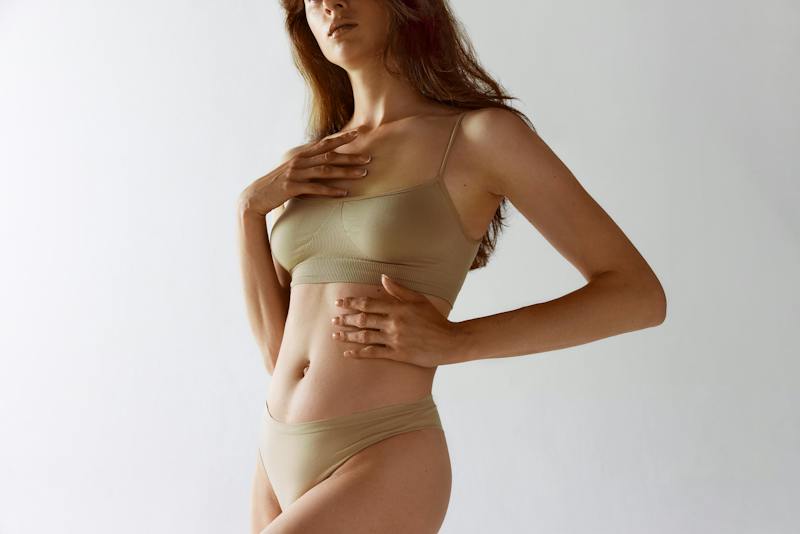
VECTRA 3D imaging helps plan a combined breast and body result by capturing a three-dimensional model of your torso, then letting you and your surgeon preview different breast options on your own body before surgery. Instead of choosing an implant size or lift in isolation, you can see how a breast change looks in proportion to your waist, hips, and abdomen. That matters in a combined plan like a mommy makeover, where the breast and body results are judged together every time you look in the mirror.
At Renaissance Plastic Surgery in St. Peters, VECTRA 3D imaging is part of the consultation experience. Dr. Boschert, Dr. Craig, Dr. Mills, Dr. Hulsey, or Dr. Alleyne will guide you through a picture session, then sit down with you to use the 3D simulation as the foundation of your surgical plan. Our board-certified and board-eligible plastic surgeons bring more than 100 years of combined experience to breast and body procedures for patients throughout the St. Louis area.
In this blog, we'll explain:
- Why proportion is the hardest part of planning a combined procedure
- What a VECTRA capture measures that a standard photo can't
- How you compare implant sizes and lift options on your own body
- What a simulation can and cannot promise
- How to get the most out of your simulation session
Why Proportion Is the Hard Part of a Combined Plan
Proportion is the hardest part of a combined breast and body plan because each result changes how the other one looks. A mommy makeover often pairs breast surgery with a tummy tuck or liposuction. When the waist becomes narrower and the abdomen flatter, the same breast size can suddenly look larger. A breast size chosen in isolation can end up feeling too full or too modest once the body around it changes.
How Breast and Body Decisions Interact
Several common decisions in a combined plan affect one another:
- Implant volume and waist size: A slimmer waist creates more visual contrast, so a moderate implant may deliver the shape some patients expected from a larger one
- Lift versus implant: A lift reshapes and raises the breast, while an implant adds volume, and the right balance depends on your body's overall frame
- Upper pole fullness and torso length: How full the upper breast appears depends partly on the distance between your collarbone, breast fold, and waist
- Hip and abdominal contour: Liposuction of the flanks or a tummy tuck can change your silhouette enough to shift what looks balanced on top
Combined Plans Are Common
Many patients consider breast and body procedures together. According to the ASPS 2024 Procedural Statistics Release, 26 percent of breast augmentations in 2024 were performed together with a breast lift. The same report notes that the tummy tuck has remained popular as part of a mommy makeover for postpartum mothers.
When several changes happen in one plan, deciding each one independently leaves patients guessing about the final picture. Three-dimensional imaging lets you evaluate breast options against your real body shape, which turns that guesswork into a visual, collaborative conversation with your surgeon.
What a VECTRA 3D Capture Measures
A VECTRA 3D capture uses multiple cameras photographing you at the same instant to build a detailed, three-dimensional surface model of your torso. Unlike a flat photo, the model can be rotated and viewed from any angle. Your surgeon can measure distances, volumes, and asymmetries directly on the model, then use it as a starting point for simulations.
Measurements That Matter for Breast Planning
Breast surgery planning relies on precise anatomic measurements. According to StatPearls on the NCBI Bookshelf, the breast exam includes measuring distances between the breasts and neighboring landmarks to objectively identify asymmetry and compare results before and after surgery. Key measurements include:
- Sternal notch to nipple: The distance from the base of the neck to each nipple, which helps reveal nipple asymmetry
- Nipple to breast fold: The distance from the nipple to the crease beneath the breast, which reflects lower pole skin stretch
- Breast width: The base diameter of each breast, which guides appropriate implant width
- Volume and projection: How much each breast holds and how far it projects from the chest wall
- Asymmetry: Differences in size, shape, and position between the two sides, which most people have to some degree
Grading Breast Sag
The capture also helps document breast ptosis, the medical term for sagging. StatPearls describes the widely used Regnault classification, which grades ptosis by the nipple's position relative to the breast fold:
| Grade | Nipple Position | What It Often Means for Planning |
|---|---|---|
| Grade 1, mild | At the level of the breast fold | An implant alone may be enough for some patients |
| Grade 2, moderate | Below the fold, but not the lowest point of the breast | A lift, sometimes combined with an implant |
| Grade 3, severe | Below the fold and the lowest point of the breast | A lift is usually needed |
What a Standard Photo Misses
A 2D photo flattens the body. It can't show volume, projection, or subtle differences between the two sides. Clinical photography still matters: StatPearls notes that photos help patients notice asymmetries they weren't aware of. A 3D model goes further, making those differences measurable and visible from every angle, so you and your surgeon start the planning conversation from the same page.
Comparing Implant Sizes and Lift Patterns on Your Own Body
During a VECTRA session, you see different breast options simulated on your own 3D model, so you can compare them side by side instead of imagining them. The VECTRA system at Renaissance lets you view a 3D image of your new look, try on different looks, view results from multiple angles, and decide on the size, shape, and features that suit you best.
A Typical Consultation Sequence
While each surgeon tailors the visit, a VECTRA-guided consultation for a combined plan often follows these steps:
- Discuss your goals. You and your surgeon talk through what you'd like to change about your breasts and body, and how you want the overall result to look.
- Complete the capture. You stand in front of the VECTRA camera for a quick, painless picture session that creates your 3D model.
- Review your baseline. Your surgeon walks you through your measurements and points out any natural asymmetries.
- Simulate implant volumes. You compare several implant sizes and profiles on your own body, from subtle to fuller.
- Compare lift options. You can see how a lift alone compares with a lift combined with an implant, which helps clarify whether you need volume, reshaping, or both.
- Judge the whole silhouette. Your surgeon discusses how your planned tummy tuck or liposuction may change your torso, so you can consider your breast choice in proportion to your body. Ask your surgeon how much of your abdominal plan can be shown in the simulation for your specific procedures.
- Refine and decide. You narrow down your favorite option, and your surgeon builds your surgical plan around it.
Why Comparing Options Has Real Stakes
A lift and an augmentation are different operations with different costs, scars, and recoveries. According to the ASPS 2024 Procedural Statistics Release, average surgeon fees nationally ranged from about $4,575 to $8,000 for breast augmentation and $6,500 to $11,000 for a breast lift, not including anesthesia, facility, or other costs. Seeing both options on your body before you commit helps you invest in the result you actually want.
When You're Between Two Sizes
Many patients narrow their choice to two neighboring implant sizes. Simulating both side by side, from the front, side, and three-quarter views, often makes the decision clear. If it doesn't, your surgeon can explain how each option would likely look as swelling resolves and your tissues settle.
What a 3D Simulation Can and Cannot Promise
A 3D simulation is a communication tool, not a guarantee of your final result. It's one of the best ways to align your expectations with your surgeon's plan, but your body, not the software, ultimately determines the outcome. Understanding the limits of a simulation helps you use it wisely and feel confident in your decision.
What a Simulation Does Well
A simulation excels at helping you and your surgeon share the same vision. It can:
- Show the general size, shape, and projection of different breast options on your frame
- Reveal pre-existing asymmetries so they don't come as a surprise after surgery
- Help you compare a lift, an implant, or both in a concrete, visual way
- Give your surgeon a clear record of the look you chose to guide surgical planning
What a Simulation Cannot Predict
Several factors that shape your result can't be fully modeled in advance:
- Skin quality and elasticity, which affect how tissue drapes over an implant and how well a lift holds over time
- Healing and scarring, which vary from person to person
- Swelling, which can make breasts and the abdomen appear larger for weeks after surgery
- Settling, since breasts often take months to reach their final shape after a lift or augmentation
- Future changes, such as weight fluctuation, pregnancy, and natural aging
StatPearls notes that after many lift techniques, it can take months for the breast tissue to settle and reveal its final shape, so early results aren't the full picture.
Why Balanced Expectations Lead to Better Satisfaction
Patients who understand that a simulation is an approximation tend to feel more satisfied with their real result. According to StatPearls, managing expectations and maintaining open communication with patients helps reduce dissatisfaction with breast surgery. A VECTRA session supports exactly that kind of conversation. Treat the simulation as a shared target, then trust your surgeon to explain how your unique anatomy may shift the final outcome.
How to Use Your VECTRA Simulation Session Well
The best way to use your VECTRA session is to come prepared with clear goals, reference images, and questions. A little preparation turns a quick demonstration into a productive planning conversation. Use these steps to get the most out of your appointment:
- Bring reference photos. Save a few images of breast and body shapes you like, and a few you don't. Photos of people with a build similar to yours are the most helpful.
- Think about your clothing. Consider the tops, swimsuits, and bras you want to wear after surgery. Some patients bring a favorite fitted top to help describe the look they want.
- Describe your lifestyle. Tell your surgeon if you run, lift weights, or have an active job, since that can influence implant size and placement.
- Ask for a range. Instead of fixating on a single size, ask to see a smaller, middle, and larger option. Seeing the range helps you understand what each step really changes.
- View every angle. Look at the front, side, and three-quarter views, and rotate the model. A size that looks perfect from the front may feel different from the side.
- Ask what's least reliable. Ask your surgeon which parts of the simulation are most and least predictive for your anatomy, such as skin quality or how a lift may settle.
- Discuss the full plan. Make sure you understand how your breast choice fits with your tummy tuck, liposuction, or other body procedures in the overall result.
- Take your time. You don't need to decide during the appointment. Ask whether you can review your simulation again before finalizing your plan.
Questions to Ask Your Surgeon
Consider asking: Which option best fits my frame and goals? Do I need a lift, an implant, or both? How might my results change as swelling resolves? What would you recommend if you were planning this for someone with my anatomy? Clear answers to these questions will help you move forward with confidence.
See Your Possibilities With VECTRA 3D Imaging at Renaissance Plastic Surgery
Planning a combined breast and body procedure is about more than choosing a size. It's about creating balance, so every part of your result looks natural and works together. VECTRA 3D imaging lets you see that balance on your own body before surgery, giving you a clearer picture and greater peace of mind.
For 25 years, Renaissance Plastic Surgery has helped patients in St. Peters, St. Charles, and St. Louis achieve natural-looking results through breast procedures, mommy makeovers, and body contouring. Our board-certified and board-eligible plastic surgeons use advanced tools like VECTRA to build a plan tailored to your unique goals. Watch Abbie's breast augmentation journey to hear one patient's experience, then schedule your VECTRA 3D imaging consultation in St. Louis by booking online or calling 636-206-3463.
This information is provided for educational purposes only and does not replace a consultation with a board-certified plastic surgeon. Outcomes, risks, and suitability vary from patient to patient. 3D simulations are approximations and do not guarantee surgical results.
Sources
- Martinez AA, Chung S. Breast Ptosis. StatPearls, NCBI Bookshelf
- American Society of Plastic Surgeons: 2024 Procedural Statistics Release
